Choosing the right dumbbell weight is essential for a safe and effective workout. Whether you’re a beginner or an experienced lifter, selecting the appropriate weight can impact your exercise form, progress, and overall results. In this article, we’ll guide you through the steps to identify the best dumbbell weight for your fitness goals.
Identify Your Fitness Goals
The first step in choosing the right dumbbell weight is to clarify your fitness objectives. Are you focusing on building strength, increasing endurance, or toning muscles? Your goal will influence the weight you choose.
- Strength Building: Opt for heavier weights that allow you to perform 4-6 reps per set.
- Endurance and Toning: Lighter weights with higher repetitions are suitable, typically 12-15 reps per set.
- Muscle Growth: A moderate weight that enables 8-12 reps can help achieve hypertrophy.
Assess Your Current Strength Level
Your present strength and fitness level play an important role. Newcomers might need to start with lighter weights, while seasoned athletes may already have a baseline strength that allows for heavier lifting.
- Test with a light set of dumbbells and increase until you find a challenging weight.
- Consider consulting a fitness professional for an initial assessment.
Consider the Specific Exercise
Dumbbell weight selection isn’t only about general fitness goals; it also varies depending on the specific exercises you are doing. Compound movements like squats and deadlifts can often handle heavier weights than isolation exercises such as bicep curls or tricep extensions.
Product Recommendation: Adjustable Dumbbells
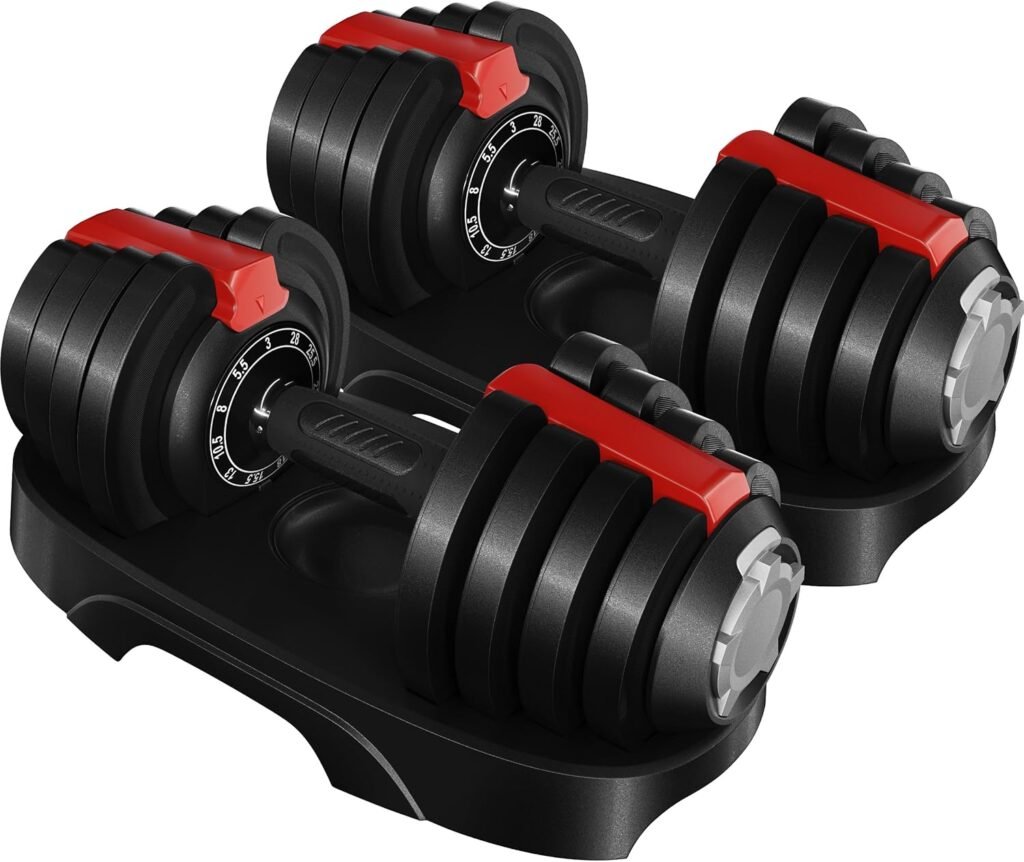
If you’re uncertain about which specific weight to buy, or if you have limited storage, you might consider investing in adjustable dumbbells. These allow you to vary the weight, giving you flexibility for multiple exercises and progressions.
Check out the Bowflex SelectTech Adjustable Dumbbells to learn more. These adjustable options can save space and adapt to your evolving fitness needs.
Test the Weight Before Buying
Whenever possible, try out different weights before making a purchase. This approach ensures that the selected weight feels right for your current level and fitness program.
- Visit a local gym or sports store.
- Experiment with various weights across different exercises.
Symmetry and Safety
Ensure that your left and right sides can handle the weight symmetrically. Lifting excessively heavy weights can lead to poor form and increase the risk of injury. Prioritize safety by choosing a weight that you can control.
By following these guidelines, you can choose the right dumbbell weight, supporting a more effective, safe, and satisfying exercise program. Remember, progressive overload over time is key; don’t rush the process.